
Quick answer
Is it normal for a fridge to make noise?
Yes, light humming, clicking, gurgling and the occasional crack are normal. Loud buzzing, grinding, squealing or repeated clicking without cooling usually point to a fan motor, ice maker or start relay that needs attention.
Refrigerators are never completely silent. A modern fridge has a compressor, fans, valves and a defrost system, and each makes its own sounds. The trick is knowing which noises are part of normal operation and which point to a part that’s wearing out.
Normal Fridge Sounds
| Sound | What it usually is |
|---|---|
| Low hum | Compressor running |
| Whooshing or airflow | Fans moving air through the fridge and freezer |
| Gurgling or bubbling | Refrigerant flowing through the tubing |
| Sizzling or dripping | Water from the defrost cycle hitting a warm surface |
| Cracking or popping | Plastic parts expanding and contracting with temperature changes |
| Clicking at start or stop | The control or start relay switching the compressor |
| Buzzing or water flow, then thunk | Ice maker filling and dropping ice |
New fridges and high-efficiency models with variable-speed compressors may sound different from older ones, sometimes running longer at a quieter level.
Noises That Usually Mean a Problem
Loud buzzing, grinding or squealing from inside the freezer
This often points to the evaporator fan, which circulates cold air. Fan motors wear out, and ice can build up and hit the blades. If the noise gets louder when you open the freezer door (on models where the fan keeps running), the evaporator fan is a likely source. LG fridges can show Er FF for a freezer fan fault; Samsung models may show 21E for the freezer fan or 22E/22C for the fridge fan, which is often iced up.
Rattling or buzzing from the bottom back
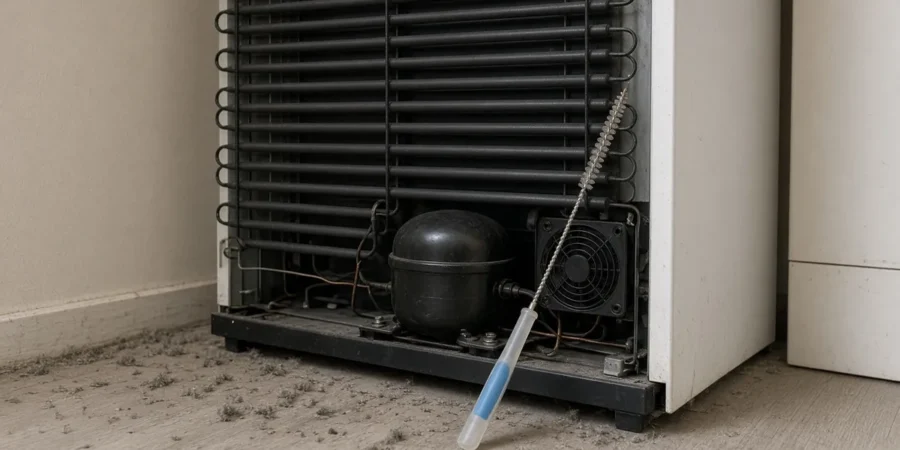
This area holds the compressor, the condenser fan (on many models), and the drain pan.
- A drain pan that’s loose or shifted can rattle.
- Dust and debris on the condenser fan can make it noisy.
- Tubing can vibrate against the cabinet.
- LG fridges can show Er CF for a condenser fan problem.
Repeated clicking with no cooling
If you hear a click every few minutes and the fridge isn’t cooling, the compressor may be trying to start and failing. The start relay or the compressor itself may be at fault. This needs a technician.
Knocking or banging
A fridge that isn’t level, or one sitting against the wall or cabinets, can knock when the compressor starts or stops. Some ice makers also knock when dropping ice.
Water running constantly
If you hear water flowing when the ice maker or dispenser isn’t in use, the water inlet valve may be stuck.
How to Pinpoint Where the Noise Is Coming From
- Open the freezer door. If the noise gets louder, it’s likely inside the freezer (evaporator fan or ice).
- Listen at the bottom back. If the noise is loudest there, think compressor, condenser fan or drain pan.
- Note the timing. Noise only when the compressor starts suggests vibration or levelling. Noise only when ice drops is the ice maker.
- Record a short video. Noises often stop when a technician arrives, and a recording helps with diagnosis.
What You Can Check Yourself
Safety first: unplug the fridge before removing any panel or cleaning near fans.
- Level the fridge. Adjust the front feet so it’s stable and doesn’t rock. Many fridges should tilt slightly back so the doors close on their own.
- Give it space. Make sure it isn’t touching walls or cabinets.
- Check the drain pan. Remove the lower front grille (if your model has one) and make sure the drain pan is seated properly.
- Clean the condenser coils and fan (on models with accessible coils). Vacuum dust from the coils and around the fan blades.
- Check the freezer for ice. Frost on the back panel or around the fan cover can cause the fan blades to scrape. A manual defrost (unplugged, doors open, for several hours, with food moved to coolers) may stop the noise temporarily, but ice usually returns if a defrost part has failed.
- Look at what’s on top. Items on the fridge can rattle with vibration.
When Noise Means Cooling Problems Are Coming
A failing evaporator or condenser fan reduces airflow, which leads to warm temperatures in the fridge. If you notice noise and warmer food, deal with it quickly. If you’re weighing repair against replacement on an older fridge, our guide to how long appliances last can help.
When to Call a Pro
Call a technician if the noise is loud and constant, you hear grinding or squealing from a fan, the fridge clicks repeatedly without cooling, or noise comes with warmer temperatures. Fans, start relays and defrost parts are common repairs.
See our refrigerator repair service, plus our Samsung and LG repair pages.
Book a repair: call 437-662-1414 or book a visit online. We’re open 7 AM to 11 PM every day, statutory holidays included, at the same price, and we serve Toronto, North York, Scarborough and Etobicoke. The $70 service call is waived when you go ahead with the repair, and our repairs carry a 3 to 6 month warranty depending on the job. We’ve been fixing appliances since 2004 with licensed, insured and certified technicians. Read our 350+ Google reviews.
Frequently Asked Questions
Is it normal for a fridge to make noise?
Yes. Humming, gurgling, light clicking, sizzling during defrost and occasional cracking are normal. Loud grinding, squealing or constant buzzing are not.
Why is my fridge buzzing loudly?
Loud buzzing often comes from a worn evaporator or condenser fan, ice hitting a fan blade, or a struggling compressor. If it’s new or getting worse, have it checked.
Why does my fridge click but not cool?
Repeated clicking with no cooling can mean the compressor is trying to start and failing. A start relay or compressor problem needs a technician.
Can I fix a noisy fridge myself?
You can level it, clean the condenser coils and fan, check the drain pan and clear ice from the freezer. Fan motor or compressor issues should be handled by a technician.