
Quick answer
Is it safe to use the self-cleaning oven feature?
Yes, if you remove the racks and loose debris, ventilate the kitchen, stay home during the cycle and keep pets, especially birds, away from the fumes. Don't run it right before a holiday meal, because the high heat can occasionally blow a fuse or damage a control.
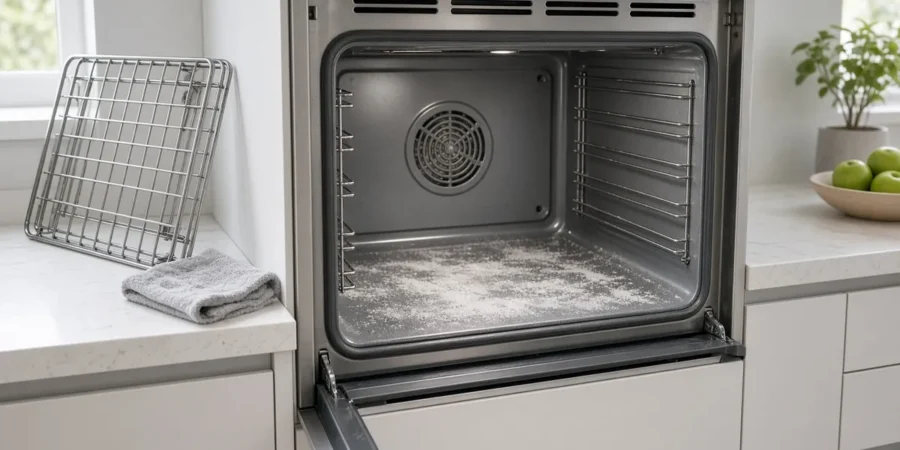
A self-cleaning oven heats its empty cavity to a very high temperature and turns baked-on grease and spills into a light ash you can wipe away. It’s convenient, but it’s also the hardest thing you can ask an oven to do. Used carelessly, it can cause smoke, damage parts, or leave you with a door that won’t unlock. Here’s how to use it properly.
We only service electric appliances. If yours is a gas model, please contact a licensed gas fitter.
Self-Clean vs. Steam Clean
| High-heat self-clean (pyrolytic) | Steam clean | |
|---|---|---|
| How it works | Very high heat burns residue to ash | Water and low heat loosen light soil |
| Typical length | Several hours, plus cool-down | Usually under an hour |
| Best for | Heavy, baked-on grime | Light, recent spills |
| Door locks? | Yes, until the oven cools | Usually not |
| Stress on parts | High | Low |
If your oven has both, use steam clean for routine upkeep and save the high-heat cycle for when you really need it.
Before You Start
- Read your manual. Cycle options, rack instructions and cleaning advice vary by model.
- Remove the racks unless your manual says they’re self-clean safe. Standard chrome racks can discolour and lose their smooth glide.
- Remove everything else: pans, thermometers, foil, pizza stones, broiler pans.
- Wipe out loose debris and pooled grease. Large spills can smoke heavily or even flare.
- Don’t use oven cleaner on a self-cleaning oven’s interior unless the manual approves it. Chemical residue can damage the enamel at high heat.
- Don’t clean the door gasket. The woven seal around the door is delicate. Rubbing it can damage it and let heat escape.
- Ventilate. Turn on the range hood and open a window. Some smell and light smoke are normal.
- Move pet birds out of the kitchen area. Birds are very sensitive to fumes, and many oven manuals warn about this.
Running the Cycle Safely
- Stay home. Never start a self-clean cycle and leave the house or go to bed.
- Keep children and pets away from the oven door and cooktop, which get very hot.
- Don’t try to open the door. It locks automatically for safety and stays locked until the oven cools.
- Don’t run it right before a big cooking day. Self-clean is hard on parts, and if something fails you want time to get it fixed. Running it the morning of a holiday dinner is risky.
After the Cycle
- Wait for the door to unlock on its own. It can take a while after the cycle ends.
- Once the oven is cool, wipe the ash out with a damp cloth.
- Clean the door glass and the area outside the gasket with a mild cleaner.
- Replace the racks.
Problems After a Self-Clean Cycle
The door won’t unlock
Give it time first; the oven must cool below the lock temperature. If it’s fully cool and still locked:
- Switch off the range breaker for about a minute, then turn it back on. This resets the control on many models.
- Try starting and cancelling a short self-clean or bake setting, which can cycle the lock motor.
- Don’t force the door. You can break the latch.
Door-lock codes vary by brand. Frigidaire ovens use F90 to F94 for door lock faults, and Samsung ovens commonly show C-d1 for a door lock issue. Check your manual for your exact model.
The oven won’t heat after self-clean
The extreme heat can be the last straw for a weak part. Common failures afterward include a burnt-out element, a blown thermal fuse, a failed temperature sensor, or a damaged control board. If the bake element doesn’t glow, see our guide to oven element replacement. If both elements are fine, the issue is likely a sensor, fuse or control, which needs a technician.
The control panel is blank or showing a code
Turn off the breaker for a minute and restore power. If the display stays blank, a thermal fuse or the control may have been damaged by heat.
How Often Should You Self-Clean?
Only when it’s needed. For most households, wiping spills after they cool, using a liner on the rack below messy dishes (not the oven floor), and an occasional steam clean keep the oven in good shape. Many people only need a full high-heat clean a few times a year, or less.
When to Call a Pro
Call a technician if the door stays locked after the oven has cooled and a breaker reset, the oven stops heating or the display goes blank after a self-clean, or you notice a burning electrical smell (not the normal cleaning smell). These usually involve the door lock motor, thermal fuse, sensor or control board.
We repair electric ovens and ranges from Frigidaire, GE, Whirlpool, KitchenAid, Samsung, LG, Bosch and more. See our oven and stove repair page.
Book a repair: call 437-662-1414 or book a visit online. We’re open 7 AM to 11 PM every day, statutory holidays included, at the same price, and we serve Toronto, North York, Scarborough and Etobicoke. The $70 service call is waived when you go ahead with the repair, and our repairs carry a 3 to 6 month warranty depending on the job. We’ve been fixing appliances since 2004 with licensed, insured and certified technicians. Read our 350+ Google reviews.
Frequently Asked Questions
Is it safe to use the self-cleaning oven feature?
Yes, when you follow the manual: remove racks and loose debris, ventilate, keep kids and pets away, and stay home for the whole cycle. Don’t use it right before you need the oven for something important.
Why won’t my oven door unlock after self-cleaning?
The door stays locked until the oven cools. If it’s cool and still locked, switch off the breaker for a minute and restore power. If that doesn’t release it, the door lock motor or control may need service.
Can self-cleaning damage my oven?
The high heat stresses parts such as elements, sensors, thermal fuses and controls. A part near the end of its life may fail during or after the cycle. Using it sparingly helps.
Should I remove oven racks before self-cleaning?
Usually yes. Unless your manual says the racks are self-clean safe, remove them so they don’t discolour or lose their smooth sliding finish.