
Quick answer
Why does my fridge freezer have so much frost?
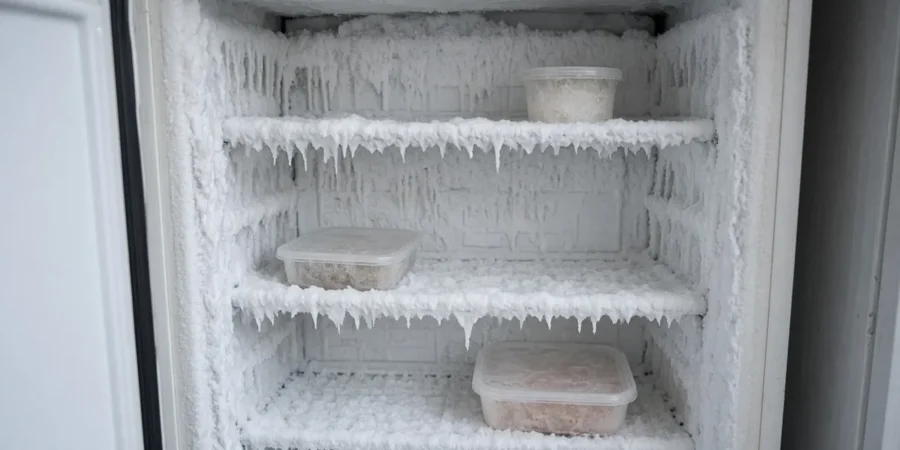
Heavy frost usually means warm, moist air is getting in through a worn door seal or a door left ajar, or the automatic defrost system has failed. Thick frost on the back panel blocks airflow, so the freezer and fridge warm up.
A little frost on frozen food packages is normal. Thick frost on the walls, a back panel covered in ice, or a freezer that won’t keep ice cream hard is not. Frost and poor freezing are often connected: frost blocks the airflow, and the freezer warms up. Here’s how to find the cause.
Safety First
Unplug the fridge or switch off the breaker before removing the rear freezer panel or doing a manual defrost. Never chip ice with knives, screwdrivers or ice picks; you can puncture the evaporator, which is a sealed-system repair. Use towels to protect the floor.
Where Is the Frost?
| Frost pattern | Likely cause |
|---|---|
| Frost near the door or around the opening | Door seal, or door left ajar |
| Frost on food packages and ice crystals | Frequent door opening, humid air, food stored uncovered |
| Even frost over the back panel, fridge warming | Defrost system fault |
| Frost on the freezer floor or ice sheet | Frozen defrost drain |
| Frost inside the ice maker area | Ice maker compartment seal or heater (common in some French-door models) |
1. Door Seal and Door Closing
When warm, humid air gets into the freezer, it freezes onto the walls. Check the freezer gasket for tears or gaps using the paper test: close the door on a sheet of paper and pull. It should resist. Clean the gasket with warm, soapy water. Also check that:
- The freezer drawer is on its rails and closes fully.
- Packages or ice bins aren’t blocking the door.
- The fridge tilts slightly backward so doors close on their own.
2. Usage Habits
- Open the freezer less often and close it quickly.
- Let hot food cool before freezing.
- Wrap food tightly to reduce freezer burn.
- Don’t overpack. Keep vents clear so air can circulate.
3. Temperature Setting
Set the freezer to -18°C (0°F). A setting that’s too warm won’t freeze well; very cold settings don’t help with frost and make the fridge work harder.
4. The Automatic Defrost System
Frost-free freezers melt frost off the evaporator coil several times a day using a defrost heater, controlled by a timer or control board and protected by a defrost thermostat or sensor. If any part fails, frost builds up on the coil behind the back panel until airflow stops. Signs include:
- Frost on the back panel or around the vents
- A fridge section that warms up while the freezer is still cold-ish
- A fan that scrapes or is noisy (from hitting ice)
- Cooling that returns after a manual defrost, then fades again over days or weeks
Some models show a code: on LG, Er dH commonly indicates a defrost heater issue, and on Samsung, 5E commonly indicates a fridge defrost sensor fault. Diagnosing which defrost part failed needs testing, but a manual defrost can buy time.
5. Manual Defrost (Temporary Fix)
- Move food to a cooler or another freezer.
- Unplug the fridge or switch off its breaker.
- Leave the doors open with towels on the floor and in the bottom of the freezer.
- Allow 24–48 hours for all ice behind the panel to melt. A fan blowing into the freezer can help. Don’t use a heat gun.
- Dry everything, plug back in, and let it reach temperature before reloading.
If frost returns, a defrost part has likely failed, and a technician should test it.
6. Frozen Defrost Drain
A drain that freezes causes ice on the freezer floor and water leaks. See our guide to a fridge leaking water for how to clear it.
7. Freezer Not Freezing, No Frost
If the freezer isn’t cold and there’s no frost problem, check the basics in our fridge not cooling guide: power, settings, condenser coils, and the condenser fan. If the compressor runs constantly but nothing gets cold, there may be a sealed-system problem, which needs a technician.
Prevent Frost
- Clean door gaskets regularly.
- Don’t leave the freezer open while you look for something.
- Keep the fridge level so doors close firmly.
- Clean condenser coils yearly.
- Keep the area around vents clear.
When to Call a Pro
Call a technician if frost keeps coming back after a manual defrost, the freezer won’t reach -18°C, or a defrost error code appears. Defrost heaters, sensors, thermostats, control boards, fans and door gaskets can all be replaced.
See our refrigerator repair service, and our Samsung and LG repair pages.
Book a repair: call 437-662-1414 or book a visit online. We’re open 7 AM to 11 PM every day, statutory holidays included, at the same price, and we serve Toronto, North York, Scarborough and Etobicoke. The $70 service call is waived when you go ahead with the repair, and our repairs carry a 3 to 6 month warranty depending on the job. We’ve been fixing appliances since 2004 with licensed, insured and certified technicians. Read our 350+ Google reviews.
Frequently Asked Questions
Why does my freezer have so much frost build-up?
Common causes are a damaged door seal, a door that doesn’t close fully, frequent door opening, or a failed automatic defrost system.
How do I defrost my freezer properly?
Unplug it, move food to a cooler, leave the doors open with towels down, and let all ice melt for 24 to 48 hours. Never chip ice with sharp tools.
Why does frost come back after defrosting?
If frost returns on the back panel, a defrost part such as the heater, defrost thermostat or sensor, or control may have failed.
Why is my freezer not freezing?
Check the temperature setting, door seals, condenser coils, and the condenser fan. Frost blocking the airflow from a defrost fault is also common.