
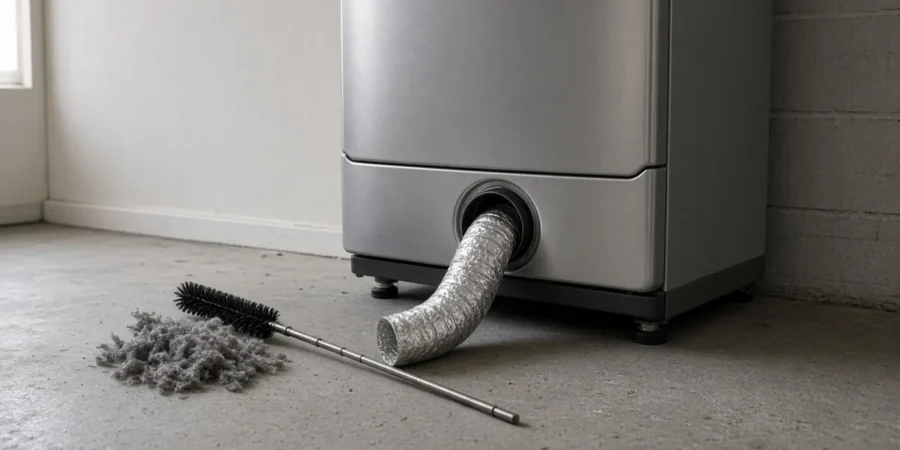
Lint is the by-product of every load you dry. Most of it gets caught by the lint screen, but some always slips past and settles in the duct behind the dryer and in the vent run to the outside. Over time that lint narrows the airway. The dryer works harder, loads take longer, and the exhaust gets hotter. In the worst case, lint is also fuel.
Cleaning the vent is one of the most useful maintenance jobs you can do. Here’s how to do it properly, not just the lint screen.
Signs Your Dryer Vent Needs Cleaning
- Loads that used to dry in one cycle now need two.
- Clothes and the top of the dryer feel unusually hot at the end of a cycle.
- A burning or musty smell in the laundry room.
- The outside vent flap barely opens, or you see lint around the exterior hood.
- An airflow warning on the display. For example, LG dryers show d80, d90 or d95 as exhaust restriction warnings, Samsung dryers may show Clg, C80 or C90, Whirlpool and Maytag may show Check Vent or AF, and Electrolux uses EF1 for a vent blockage.
How Often Should You Clean a Dryer Vent?
| Part | How often | Why |
|---|---|---|
| Lint screen | Every load | A full screen restricts airflow immediately. |
| Lint screen wash | Every few months | Dryer sheets and softener leave a film that blocks air even when the screen looks clean. Wash with warm soapy water and let it dry fully. |
| Transition hose behind dryer | At least once a year | Lint collects at bends and dips. |
| Full vent run to outside | At least once a year, more often for large families, pets, or long vent runs | A commonly recommended interval for fire safety and efficiency. |
| Exterior hood | A few times a year, and after snowfall | Lint, nests and snow can block the flap. |
In Toronto winters, also check that snow and ice aren’t blocking the exterior hood. A buried hood is effectively a closed vent.
What You’ll Need
- A dryer vent brush kit (flexible rods with a brush head that attach to a drill or turn by hand)
- A vacuum with a hose and crevice tool
- A screwdriver or nut driver for the hose clamps
- Foil duct tape (not cloth duct tape) and replacement clamps if needed
- Gloves and a flashlight
Step-by-Step: How to Clean a Dryer Vent
- Unplug the dryer. Pull it out gently from the wall. If it’s hard to reach the plug, turn off the breaker.
- Clean the lint screen and its housing. Remove the screen and vacuum the slot it sits in. A long, thin lint brush helps here.
- Disconnect the transition hose from the back of the dryer and from the wall duct. Loosen the clamps, don’t tear the hose.
- Clean the hose. Shake out loose lint and run the brush through it. If it’s thin foil or white plastic, replace it with semi-rigid or rigid metal duct, which resists crushing and lint build-up.
- Vacuum the dryer’s exhaust outlet on the back of the machine.
- Brush the wall duct. Feed the brush into the duct and work it toward the outside in short sections, pulling it back regularly to remove lint. Avoid forcing it around tight bends.
- Clean from outside. Remove the hood cover if possible, pull out lint by hand, and run the brush in from that end too. Make sure the flap moves freely.
- Reconnect everything. Secure the hose at both ends with clamps, keep it as short and straight as possible, and avoid sagging dips where lint can collect.
- Test. Plug the dryer in, run it on a heated cycle, and check for strong airflow at the exterior hood.
Condo and townhouse vents
In many Toronto condos and stacked townhouses, the dryer vent runs a long way through the building or into a shared shaft. You can still clean the lint screen, the housing and the transition hose, but the main run may be the building’s responsibility. If you’ve cleaned your section and still get airflow warnings, ask your property manager about the building’s vent cleaning schedule.
Common Mistakes to Avoid
- Using screws to join duct sections. Screws poke into the airway and catch lint. Use foil tape and clamps.
- Crushing the hose when pushing the dryer back.
- Venting into the attic, garage or a crawlspace. Dryer exhaust must go outside.
- Ignoring a screen on the exterior hood. Mesh screens catch lint and block the vent. Many safety guides advise against them on dryer vents.
If your dryer is still struggling after cleaning, read our guide to a dryer not heating, which covers thermal fuses, elements and thermostats.
When to Call a Pro
Call a technician if your dryer still takes too long after a thorough clean, shows airflow codes that won’t clear, smells of burning, or stops heating. A long restricted run can cause the dryer to overheat and blow its thermal fuse, and we can check the dryer’s internal airflow path, which collects lint inside the cabinet that a vent brush can’t reach.
Our dryer repair team services all major brands, including LG and Whirlpool.
Book a repair: call 647-642-1414 or book a visit online. We’re open 7 AM to 11 PM every day, statutory holidays included, at the same price, and we serve Toronto, North York, Scarborough and Etobicoke. The $70 service call is waived when you go ahead with the repair, and our repairs carry a 3 to 6 month warranty depending on the job. We’ve been fixing appliances since 2004 with licensed, insured and certified technicians. Read our 350+ Google reviews.
Frequently Asked Questions
How often should I clean my dryer vent?
Clean the lint screen every load. Clean the transition hose and full vent run at least once a year, and more often if you dry many loads, have pets, or have a long vent run.
Can I clean a dryer vent myself?
Yes. With the dryer unplugged, you can clean the lint housing, transition hose, wall duct and exterior hood using a vent brush kit and a vacuum. Long or hard-to-reach runs may need a professional.
What happens if you never clean your dryer vent?
Lint builds up, airflow drops, drying times get longer and the dryer runs hotter. That stresses parts like the thermal fuse and heating element and increases fire risk.
What kind of dryer vent hose is best?
Semi-rigid or rigid metal duct is generally preferred over thin foil or plastic hose, because it resists crushing and collects less lint. Keep the run as short and straight as possible.