
Quick answer
What does LC mean on a Samsung dishwasher?
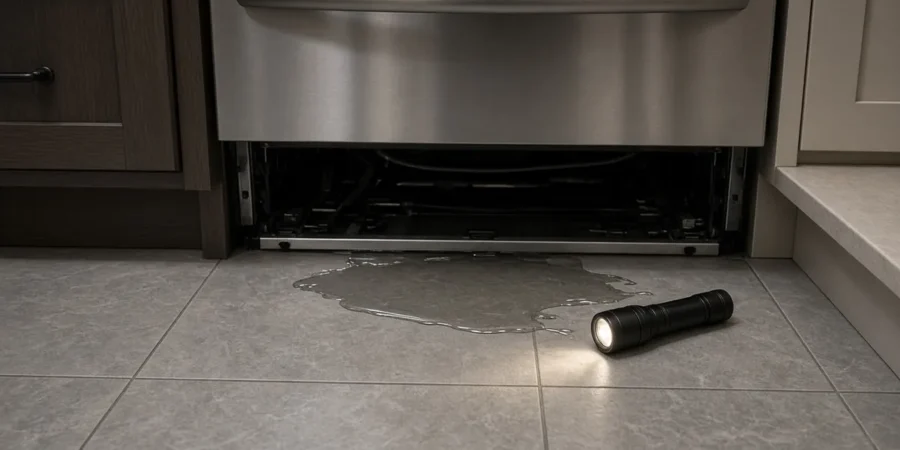
LC (LE on some models) means the leak sensor in the base has detected water. Turn off the power, soak up any water in the base, let it dry and check for oversudsing before restarting; if it returns, a hose, seal or pump is leaking.
An LC code on a Samsung dishwasher (shown as LE on some models) means the leak sensor in the base of the dishwasher has detected moisture. The dishwasher typically stops the cycle and may run the drain pump to protect your floor. It’s a warning worth taking seriously, but the cause isn’t always a major leak.
Safety First
Switch off the dishwasher’s breaker or unplug it. If water is on the floor, dry it before working near the dishwasher. Turn off the water supply valve under the sink if you see an active leak.
Common Causes of an LC Code
| Cause | What to look for |
|---|---|
| Too many suds | Hand dish soap used, or too much detergent; foam leaking from the door |
| Door seal problem | Torn, dirty or shifted door gasket; water along the bottom edge |
| Loose or damaged hose | Drips under the sink at the inlet or drain connection |
| Overloading or blocked spray arm | Water sprayed at the door edge by an item sticking out |
| Internal leak | Pump, valve, hose or tub seal leaking into the base |
| Wet sensor from a past spill | The leak is fixed, but the base is still wet |
Step-by-Step: What to Do
1. Check your detergent
The most common avoidable cause is suds. Use only automatic dishwasher detergent. If anyone in the house used dish soap, or rinsed dishes with lots of soap left on them, the suds can push water past the door seal. Run a rinse cycle once the code has cleared.
2. Inspect the door seal
- Wipe the gasket around the door and the lower door edge.
- Look for tears, gaps, or sections that have slipped out of their channel.
- Clean food debris from the gasket and the tub edge where it seals.
3. Check hoses under the sink
With a flashlight, check the water supply connection and drain hose connection under the sink for drips or dampness. A loose clamp on the drain hose can leak during a drain cycle.
4. Check loading
Make sure nothing is blocking the spray arms or sticking out where it can spray water directly at the door edge, such as a large cutting board or baking sheet.
5. Dry the base
If moisture has reached the sensor, the code will stay until it’s dry. With power off:
- Remove the lower kick plate (toe panel) if it comes off easily on your model, and dry any water you can see.
- Some people carefully tilt the dishwasher slightly back to drain water from the base pan. Only do this if it’s safe and you’re comfortable; dishwashers are fixed to the counter and connected to water and power.
- Otherwise, leave the dishwasher off with the door open for several hours, or overnight, so the base can dry.
6. Reset and test
Restore power and run a short rinse cycle. Watch for leaks at the door and underneath. If the code doesn’t return, it’s likely the cause was suds or a one-time spill.
Why the LC Code Keeps Coming Back
If the code returns even with correct detergent and a good door seal, water is probably leaking inside the cabinet. Common internal sources include:
- A cracked or loose internal hose
- A leaking pump seal or sump gasket
- A failing water inlet valve
- A crack in the tub (less common)
Finding an internal leak means removing panels and running the dishwasher to watch for drips. That’s a job for a technician.
How to Prevent Leak Sensor Errors
- Keep dish soap away from the dishwasher, and rinse off heavily soaped items before loading.
- Wipe the door gasket and the bottom door edge every few weeks.
- Clean the filter regularly so water drains properly and doesn’t back up.
- Don’t let large items stick out past the racks where they can deflect spray toward the door.
- Check under the sink a few times a year for damp spots around the dishwasher connections.
Other Samsung Dishwasher Codes
| Code | Meaning |
|---|---|
| 4C / 4E | Water supply problem |
| 5C / 5E | Drain problem |
| HE | Heater problem |
| OC / oE | Commonly indicates an over-level condition (too much water) |
For drain codes across brands, see our guide on dishwasher drain codes by brand.
When to Call a Pro
Call a technician if the LC or LE code returns after you’ve checked the detergent, door seal and hoses, or if you see water coming from under the dishwasher. Ongoing leaks can damage flooring and cabinets, so it’s worth finding the source quickly.
See our Samsung appliance repair page and our dishwasher repair service.
Book a repair: call 437-662-1414 or book a visit online. We’re open 7 AM to 11 PM every day, statutory holidays included, at the same price, and we serve Toronto, North York, Scarborough and Etobicoke. The $70 service call is waived when you go ahead with the repair, and our repairs carry a 3 to 6 month warranty depending on the job. We’ve been fixing appliances since 2004 with licensed, insured and certified technicians. Read our 350+ Google reviews.
Frequently Asked Questions
What does LC mean on a Samsung dishwasher?
LC (or LE on some models) means the leak sensor in the base of the dishwasher has detected moisture. Causes range from suds and door seal issues to internal leaks.
How do I reset the LC code on my Samsung dishwasher?
Switch off power, find and fix the cause, and let the base dry completely, often several hours or overnight. Then restore power and run a short rinse.
Can dish soap cause an LC error?
Yes. Hand dish soap creates excessive suds that can push water past the door seal and into the base, triggering the leak sensor. Use only dishwasher detergent.
Is it safe to use my dishwasher with an LC code?
It’s best not to. The code means water has reached the base. Fix the cause first, and call a technician if it returns, to avoid damage to floors and cabinets.